 This morning's news included a report of an incredibly heroic act. A young man was on his way for a late stop at a gas station to fill his car in Lafayette, Indiana, just after midnight. Along the way, he came upon a house in flames. The report described how this young man snatched five children from the dense black smoke and intensely hot flames at his own risk and sustained injuries in the process of being these children’s savior.
In his epistle, St. Jude encouraged Christians to “contend for the faith that was once delivered to the saints” (v3) as he compares the lawlessness of the world and the life in Jesus Christ. In his encouragement, he calls believers in Jesus Christ to persevere in a world that is hostile to the true and saving faith and wait upon the Lord for His mercy and strength that leads to eternal life. He also encourages Christians to have mercy on those who struggle with the faith (v22) and to “save others by snatching them out of the fire” (v23). At great risk to himself, the young man of Lafayette snatched children from a consuming fire. Christ Jesus went beyond the risk and laid down his life to save all people from the eternal fire of hell and damnation. His atoning sacrifice snatched all from the condemnation of the Law and the eternal cost of sin. His bodily resurrection bears witness that His sacrifice was sufficient and all who call upon His name have life eternal. Therefore, since He is the firstborn of the dead, He has the means to “keep you from stumbling and to present you blameless before His glory with great joy” (v24). With this sure and certain promise, St. Jude reminds us 21st-century Christians that the Christian faith is not a passive faith. Regardless of how difficult it is to be Christians in a society that is increasingly becoming more godless, we are called to be engaged; to snatching those who are spiritually at risk from the flames of damnation. It is easier to be passive. To live out your faith quietly and even to pull back from a collapsing society. God’s Word says differently. We need to be out there and engaged. St. Peter reminds Christians to always be prepared to give an account for the hope that is in you (1 Pet 3:15). Again, this means we need to be in society not running away from it; trusting in God – Father, Son, and Holy Spirit, to preserve and keep us in the true faith. In the holy name of Jesus. Amen. Photo: Rheo Ryan Balbuena
1 Comment
 The development of the male child is complex, and while the goal is masculinity, it is not a destination that comes with an estimated time of arrival. Luther and theologians of vocation agree that to be a child is a vocation in and of itself, with Luther even calling the relationship between child and parents vocational. Jesus Christ sanctified and blessed childhood with his own childhood as he was “conceived by the Holy Spirit, born of the virgin Mary,” (Luther's Large Catechism II 31) born under the Law like all humans (Gal 4:4), and lived a child’s life, submitting to his earthly parents to the glory of His heavenly Father (Luke 2:41). The vocation of a child is to receive. He receives his parents as he does not choose them. He receives food, shelter, clothes, and all that is needed to support his physical body and life from his parents as God the Father provides (Luther's Small Catechism II 2). The same is true with God the Father. God chooses him and brings him spiritually into His kingdom through the waters of Holy Baptism. As he receives the grace of God through Christ Jesus, this baptized child receives a new identity, which is reserved only for the baptized, namely, a son of God (Gal 4:5-7). The vocation of boyhood is to discover God’s creation, learn to serve in the family, and to be catechized in the living Word. This vocation is not static but matures, and while he continues to receive, his immediate relationships expand his vocation. One endeavor within the boy’s vocation, that his father may not appreciate but God in His fatherly wisdom permits, is that the son will bring to ruin his father’s idols. By virtue of being a normal and active child, the son will scratch the new car, break an expensive window, lose a precious tool, drop the costly laptop, or cause the father to place his career second to his son’s needs. The boy needs to be taught that to honor his parents is his most noble and heroic act, a more excellent work than the most pious acts of cloistered monks in their fortresses. Recognizing the gifts of parents is a God-pleasing thing. As the boy is taught to obey his parents, he also learns the discipline of self-sacrifice for, first and foremost, his parents and siblings, and then for his neighbors. In the ideal situation, the boy begins to identify with his father and observes the masculine vocations of manhood and fatherhood. This includes how his father loves his mother as her husband and how his father’s connectedness and servitude toward others is enacted in this physical world. Thus, he is implicitly taught, by observing his father acting Christlike, just how to nurture and minister to his future wife and family, should it be God’s will.   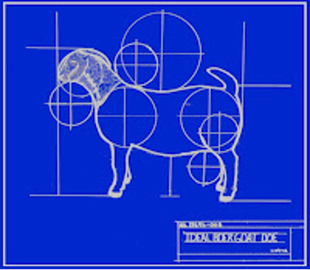 The meat goats my family and I raise are mainly for the purpose of livestock shows in 4-H and FFA. They are “show stock”. At the time of this writing, livestock from across the state and even the nation are at the Minnesota State Fair, all for the purpose of judgment. Every animal owner (called exhibitor) wants to receive the coveted purple ribbon that proclaims his or her animal is the “Champion” – Second to none! This is established not by public opinion but typically by single judge. Those of us who subject the fruits of our labor, planning, husbandry and breeding of livestock to the judge at a livestock show like the State Fair do so with the expectation that the judge has a standard and that standard is based on something higher then his own personal opinion, bias and experiences. Most livestock breed associations, publish what is considered the standard of the ideal animal for their given breed. The American Boer Goat Association publishes a standard so that people like me, and my family who wish to raise such animals, know what perfection looks like. Then when we bring our animals to livestock shows and have learned men and women judge our animals according to that specific standard, we know the animal closes to the ideal or perfect standard gets the purple ribbon and is declared “Champion”. I would like to use this as the backdrop about Christians judging things. Now some of you are thinking, “Stop the bus! Doesn’t the Bible say nobody is suppose to judge?” Why yes, it does. But keep reading. The world teaches a viewpoint of what is seen as non-judging and open-mindedness. All things are relative and no one has the right to judge another. Perhaps you have heard or used yourself the Native American expression about not judging anyone until you have walked for a period of time or distance in his or her moccasins. Shakespeare is often quoted from his work called Henry VI, “Forebear to judge, for we are sinners all.” You see, the world’s wisdom and political correctness say we're not supposed to judge. This has penetrated Christian thinking which cries “Christians are suppose to be non-judgmental. Christians, of all people, are to be open-minded. Christians are to follow Jesus and Jesus never judged anyone!” If you believe Jesus never judged, then I urge you to rethink this. Really. Jesus never told people not to judge... not the way those words are understood by most people. To say, “Jesus told us not to judge” is to tear the words away from its context and to twist the intention of what Christ Jesus was clearly teaching. Let’s look at this collection of verses that this idea or misunderstanding originates from: Matthew chapter 7, Jesus said: “Judge not, that you be not judged. For with the judgment you pronounce you will be judged, and with the measure you use it will be measured to you. Why do you see the speck that is in your brother's eye, but do not notice the log that is in your own eye? Or how can you say to your brother, ‘Let me take the speck out of your eye,’ when there is the log in your own eye? You hypocrite, first take the log out of your own eye, and then you will see clearly to take the speck out of your brother's eye. “Do not give dogs what is holy, and do not throw your pearls before pigs, lest they trample them underfoot and turn to attack you.” Jesus is clear. FIRST take the log out of your own eye THEN you can help a brother in his own sin. In other words, what Jesus DID say was we are to judge other people by the standard we want for ourselves. We are not to judge others with one set of rules and ourselves with a second set (which generally is more lenient based on our sinful nature). Jesus is also clear the measure you use to judge others will be the measure others will use to judge you. "But", I can hear the objection again, "But Jesus never judged!!!!" If you think Jesus never judged, then you need to take a serious look at the accounts of the life of Christ Jesus in the four Gospels. Jesus personally selected twelve men to be His closest disciples and to be fishers of men (Mark 1:17). He rebuked the disciples when they were wrong when they tried to keep children away from Him (Luke 18:16). He even cursed a fig tree for not producing fruit and it died (Matt 21:18-22). All four gospels records the time He cleansed the temple from corrupt moneychangers with His divine rage and a whip of cords (Matthew 21:12–17, 21:23–27 and Mark 11:15–19, 11:27–33, and Luke 19:45–48, 20:1–8 and John 2:13–16). When He allowed Himself to be arrested in the Garden of Gethsemane, He chose not to defend Himself (Luke 22:47-54). When He was on trial and before the Roman Governor Pilate, Jesus was clear that this was His choosing (John 18:33–38). Jesus is clear, He chose to lay down His life and He has the authority to pick it up again, which we know as the Resurrection (John 10:18). His whole earthly ministry was full of moments when Jesus made a decision. In other words…He judged. “Yes, BUT!!!!” If you think Jesus never judged, you need to read for yourself the 23rd chapter of the Gospel of Matthew. Here Jesus gives a tongue-lashing to the self-righteous religious elite of His day. My study Bible calls this section the “Seven Woes”. In these verses Jesus uses harsh words that I have never, ever heard any preacher use. Jesus says "Woe to you scribes and Pharisees." He says "woe to you" six more times peppering the woes with cutting words like “hypocrites; serpents, brood of vipers, blind guides, blind fools, blind men, blind Pharisees.” Ouch! I cannot find in the gospel accounts of Christ Jesus ministry that we who follow Him are told to be accepting of everything, anything, and for that matter…everybody. Jesus told us to judge. In the gospels He teaches His disciples to judge between right and wrong; He teaches His disciples to judge between the one Good Shepherd, Himself, and the other shepherds, the false shepherds. Jesus taught His disciples to distinguish between the broad way of Satan, which leads to hell and eternal death and the narrow path of repentance, forgiveness, and salvation, which ushers saved souls to heaven. One week after His glorious resurrection from the dead, John records a risen Christ Jesus standing before a disciple who had doubted the supposed return of his master and told Thomas to touch the wounds in His hands and side. That night, Jesus told Thomas to make a judgment, “Judge for yourself, Thomas. Am I real? Am I alive?” John records Thomas’ judgment in his confession, “My Lord and my God!” Jesus' entire life, from beginning to end, was dedicated to saving you and the rest of humanity. Long… long ago God had decided – judged if you will - that He would sacrifice His perfect Son so a lost and condemned world might be saved. God’s standard, HIS WORD, said there is a cost to sin and it must be paid in full with blood. So God pronounced His judgment and his judgment is final. There is no appeal. God’s decision was that He would save us from ourselves, from our sin, from the power of Satan, and from fear death. That decision…that judgment was fulfilled in Jesus the Christ, our Champion. Born as a human and yet all God, Jesus’ life fulfilled the laws we have recklessly broken; He resisted the sinful temptations which we found sweetly irresistible; He carried the sins we have committed. In fact, Jesus took our sins onto Himself and carried them to His cross. On the Cross of Calvary He died the death we deserved. If humanity was to be saved, God the Father needed to pass judgment. His Son's life would be offered up as our Substitute, as our Sacrifice to atone (to pay) for our sin. This was the judgment of God, which resulted in the redemption, and salvation of all who believe. You see, Jesus wants us to judge. He wants Christian parents and grandparents and churches to teach their children how to judge that which is real and precious from that which is temporary and fleeting. He wants us to teach all believers to distinguish the truth not “a truth” but “THEE Truth”, which comes from God-fearing, Bible-believing pastors who faithfully proclaims Christ Jesus and Him resurrected; Who proclaims repentance and the forgiveness of sins through Christ Jesus, who in fact called Himself “THE Way, THE Truth and THE Life. He wants all believers to distinguish between THE TRUTH and the elusive lies, which are spoken by false prophets. He wants us to teach all believers about integrity, honor, faithfulness, REAL God pleasing love and Truth, He wants us to teach all believers how to reject that which is thin, insignificant, trivial, unimportant and of this world, which the larvae of moths will eat and rust will decay. He wants us to judge and He wants us to teach those judgment skills to our children and to all believers. Jesus wants us to judge by using God’s standards: God's perfect law and not any person's subjective personal preferences and biases, which can be shaped and even manipulated by the world and Satan. God wants us to distinguish what is God pleasing from immoral, good from evil, a real Savior from a false pretender. He wants us to “test everything” against God’s standard. God’s standard is THE truth, it is perfect and it never changes. Against this timeless standard do we examine ourselves and hold ourselves accountable to. Confessing our faults and sins, and repenting of them, we then can help our neighbor in the same practice. Always holding up and holding on to God’s perfect standard and not our own self-contrived double standard. Scripture is clear and so is our Jesus. We are permitted to judge. First, we examine ourselves to God’s standard and then our neighbor to the same. Should we then assume the task of taking the speck out of our brother’s eye, we must do so with repentance, with the knowledge that we are not worthy of forgiveness yet God in His love and mercy has granted such through Christ Jesus, with sincere Christian love, with DEEP humility and with reverent prayer: “Father in heaven, forgive us our trespasses as we forgive those who trespass against us.” 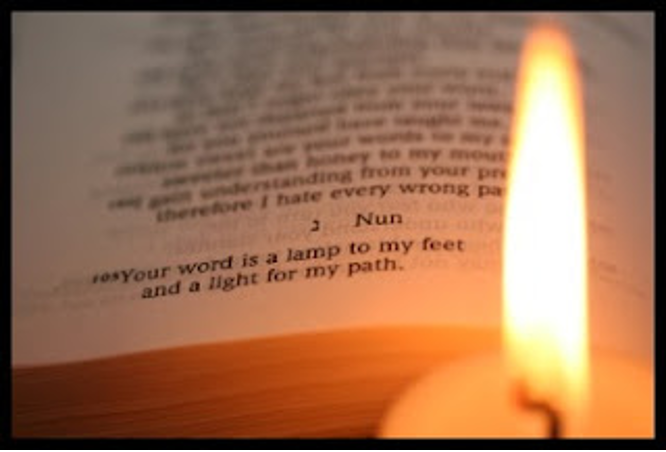  Where is God in the midst of great trouble? Where is He during the storm or when the earth shakes or when senseless violence and evil shatters life? Either He loves us or hates us or He is just indifferent. If we see disaster as an expression of God's feelings, we can only conclude that God hates us or is wrathful or even vengeful. But is that true?
In the Old Testament book of Isaiah we find, “Truly, you are a God who hides himself, O God of Israel, the Savior.” In other words, God and His will are hidden from us. Since we do not have the mind of God, when we seek answers to the “Why?” the answers will be elusive. Chasing after God's hidden will only leads us closer and closer to despair. So, how can we tell if God loves us or hates us? We know that God loves all humanity when we look back in time to a hill outside of Jerusalem and specifically to the cross of Jesus Christ. Of all places, this is where God has revealed Himself and His will. “For God so loved the world, that he gave his only Son, that whoever believes in him should not perish but have eternal life. For God did not send his Son into the world to condemn the world, but in order that the world might be saved through him.” (John 3:16 & 17) Because of this, we can say with confidence that God loves all people through Jesus and His atoning death on the cross. Holy Scripture informs us that Jesus died for us and for our salvation. He died in our place for a purpose. That purpose was for the remission of all our sins. He did this out of loving obedience to God the Father as a free gift for humanity. The Gospel is not fair; Jesus who is God in the flesh takes our sins and death and in exchange we get His royal righteousness and eternal life. We do not deserve His grace nor His love. We do not deserve forgiveness and salvation and the sure and certain hope of heaven, but He gives them to us freely. It is at the cross of Jesus that our desire for justice is turned upside-down and yet we find peace that passes all human understanding. You do not have to be a Rhodes Scholar to appreciate that life is full of pain, suffering, disaster, violence and death. Where then is our hope? Whom can we turn to when no one can make any sense of what we are watching or experiencing? Look to Jesus and his redeeming love. In all our sufferings and sorrows, we look to heaven and the hope that the Lord has for us there, and we cling to the cross more securely, and to the sure promise that He has given us life forever. |
AuthorThought from a shepherd of God's sheep and even goats. Archives
July 2022
Categories |
 RSS Feed
